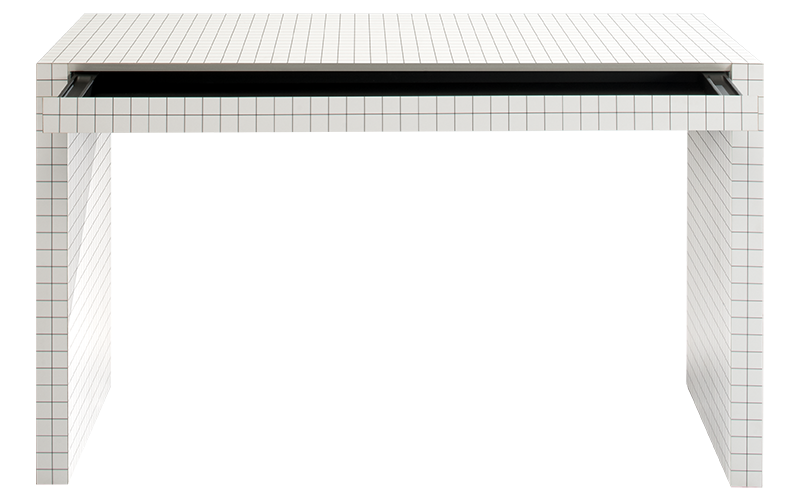
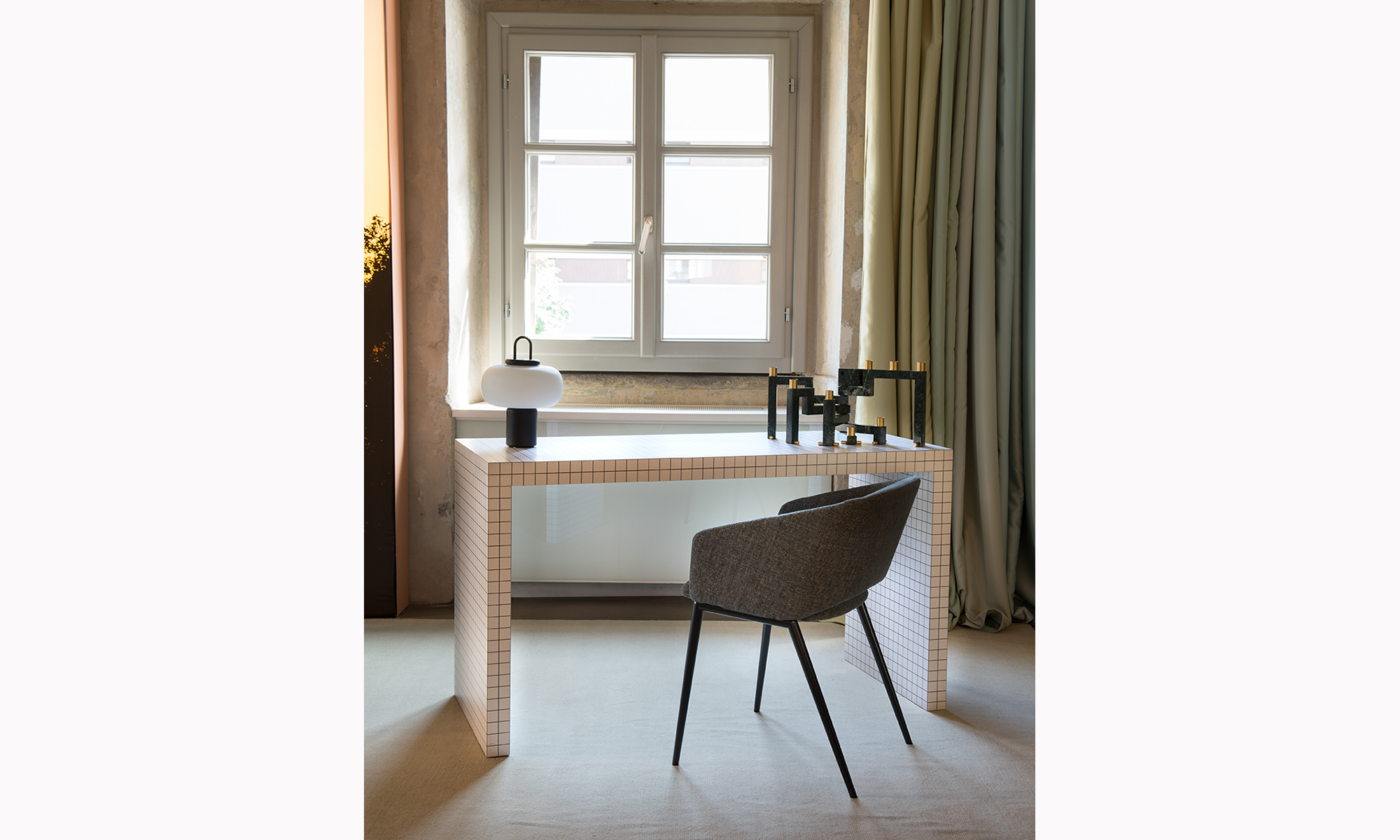
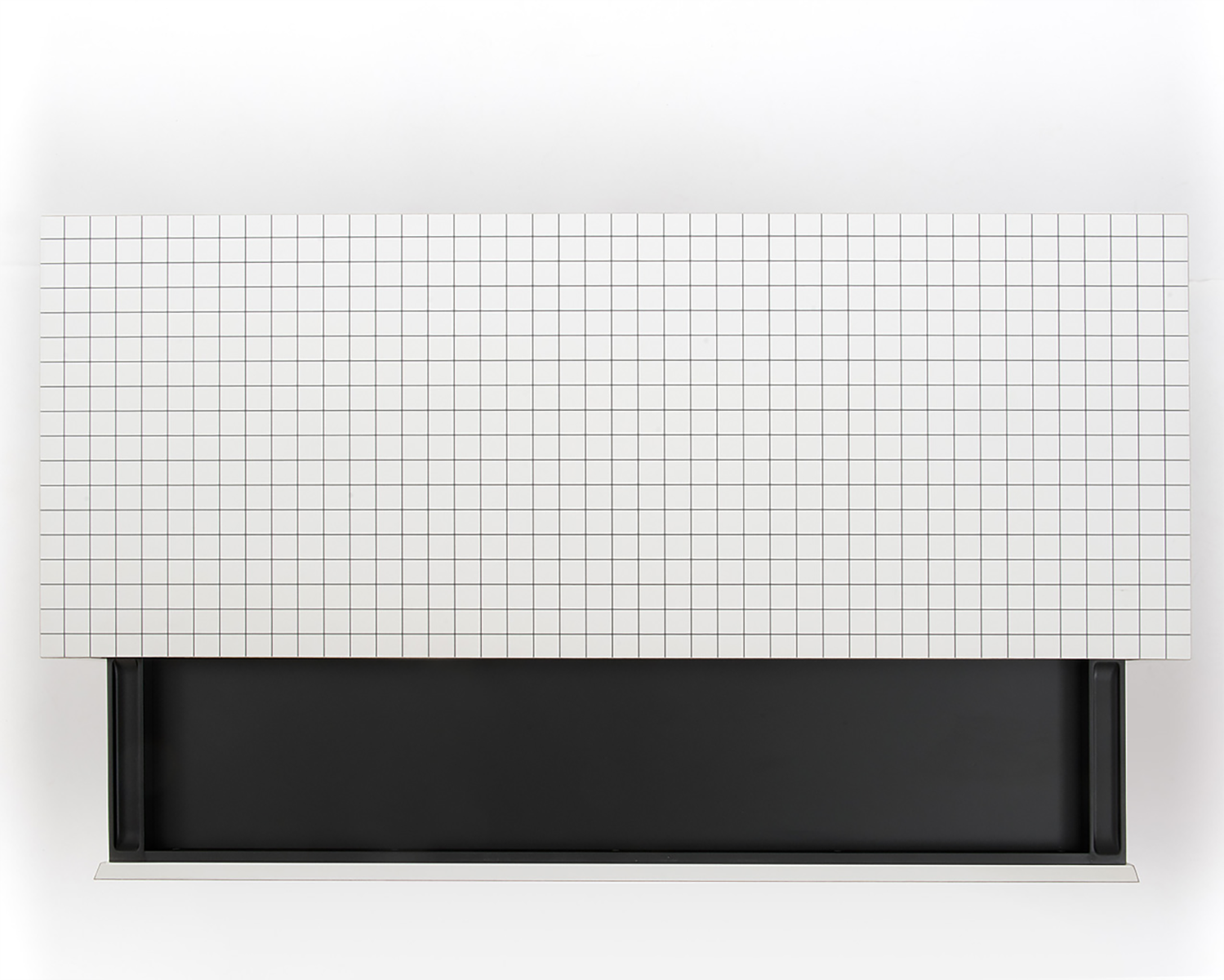
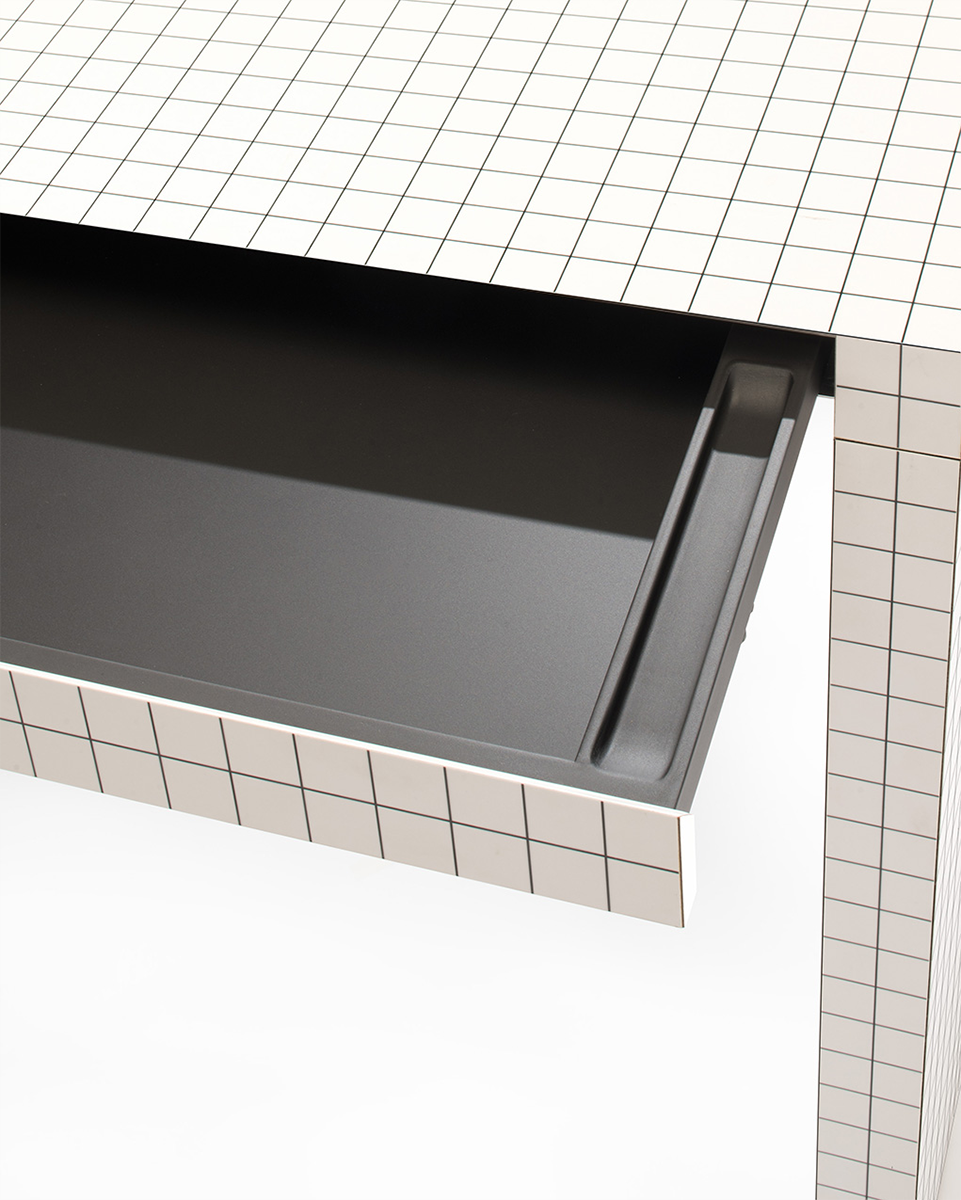
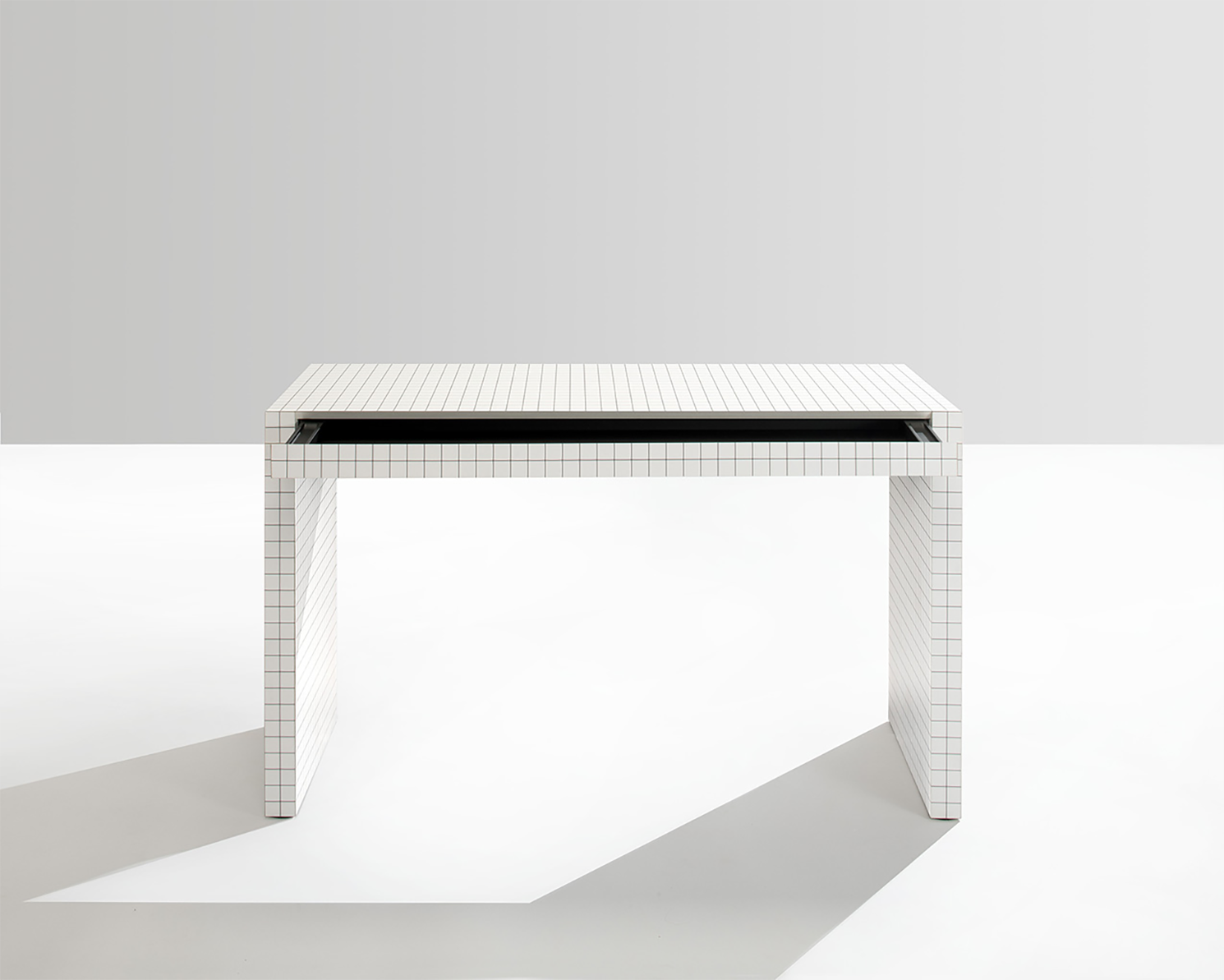
Desk.
Honeycomb
core structure coated with white Print laminate, digitally printed with black
squares at 3 cm spacing. The top hides
a retractable pull-out drawer, with a drawer compartment in black
scratch-resistant embossed painted wood.
The Seventies were years of transition and rethinking, but also of visionary utopia which revolutionised parameters, thinking, styles and perspectives. With it's story, Quaderna represents the utopia of those years. The radical movement attempts to "gobeyond the disciplinary aspect of design, that is to say the re-composition of contradictions at formal level, destroying... the usual image of the product"1. The result is a vanguard style which provokes, on the one hand, and creates stimuli for the contemporary world, on the other. “Radical design” openly confuted not just the status of design, but the entire social context in which designers worked. An explicit criticism of the rigid and dogmatic functionalism of the academy, against which the movement wished to be seen as a liberating vision of life and design.
The 1970s were years of transition and rethinking, but also of visionary utopias through which parameters, ideas, styles, and perspectives were revolutionized. Quaderna, through its history, embodies the utopias of that era. The radical movement attempts to “go beyond the disciplinary discourse of design, that is, the recomposition of contradictions at a formal level, by destroying… the habitual image of the product”¹. An avant-garde style emerged that was provocative on one hand and, on the other, generated stimuli for the contemporary world. “Radical design” openly challenged not only the state of design itself but the entire social context in which designers operated. It was an explicit critique of the rigid and dogmatic functionalism of the academy, against which it proposed a liberating vision of life and of design.

.png)
.png)
.png)
.png)
.png)
.png)